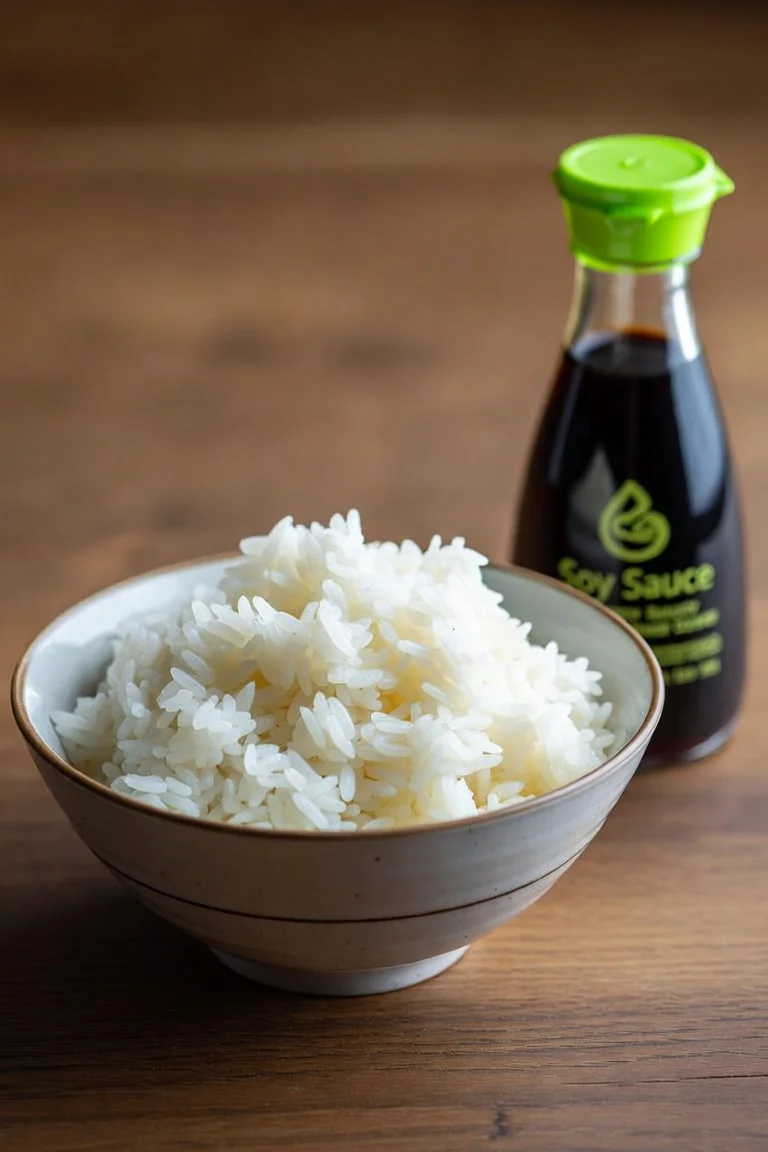
Rice and soy sauce form one of the simplest, most satisfying food pairings worldwide. Plain rice provides a neutral, fluffy base, while soy sauce delivers salty, savory umami depth. This combination appears across Asian cuisines and beyond.
Historical and Cultural Roots
Soy sauce originated in ancient China over 2,000 years ago as a byproduct of fermenting soybean paste for preservation. It spread across East and Southeast Asia, becoming a staple condiment.
Rice has served as the foundation of meals in Asia for millennia, “chi fan” in Chinese literally means “eat rice.” Soy sauce naturally complements it because rice is mild and starchy, while soy sauce’s fermented soybeans, wheat, salt, and brine create complex flavors that transform basic rice into a tasty dish.
Why the Pairing Works
- Flavor Balance: Rice is relatively bland and absorbent. Soy sauce adds saltiness, umami (the fifth taste from glutamates), and subtle sweetness or caramel notes, especially in dark varieties.
- Simplicity and Affordability: A bowl of rice with soy sauce makes a quick, cheap, filling meal—popular for frugal eating or late-night snacks.
- Versatility: It serves as a base for fried rice (soy sauce fried rice is a classic), stir-fries, or dipping. Dark soy sauce adds color and caramelization; light soy adds brighter saltiness.
- Umami Boost: Soy sauce enhances the natural savoriness of rice, making it more satisfying without needing many ingredients.
Cultural Notes and Etiquette
In some traditional Japanese and East Asian settings, pouring soy sauce directly on plain white rice can be considered poor manners. It may imply that accompanying dishes lack flavor or signal a “poor man’s meal.”
However, this doesn’t stop the combination from being widely enjoyed:
- In casual home cooking
- Western adaptations
- Dishes like soy sauce fried rice or rice with other toppings
Many people outside strict traditional contexts enjoy it freely.
Modern Twists
Today, people enhance rice with soy sauce in countless ways:
- Simple: Steamed rice + drizzle of soy sauce + optional sesame oil or green onions.
- Elevated: Soy sauce butter rice, garlic-soy rice, or mixed with vegetables and protein.
- Global appeal: Fusion dishes, sushi rice seasoning, or as a base for marinades.
Health and Practical Angle
Soy sauce provides sodium and some amino acids, but use it in moderation due to salt content. Choose low-sodium or tamari (gluten-free) versions if needed. The pairing remains popular for its convenience, especially in busy households or for meal prepping.
Rice with soy sauce endures because it is comforting, flavorful, and rooted in centuries of culinary tradition. It turns humble ingredients into something greater than the sum of its parts.