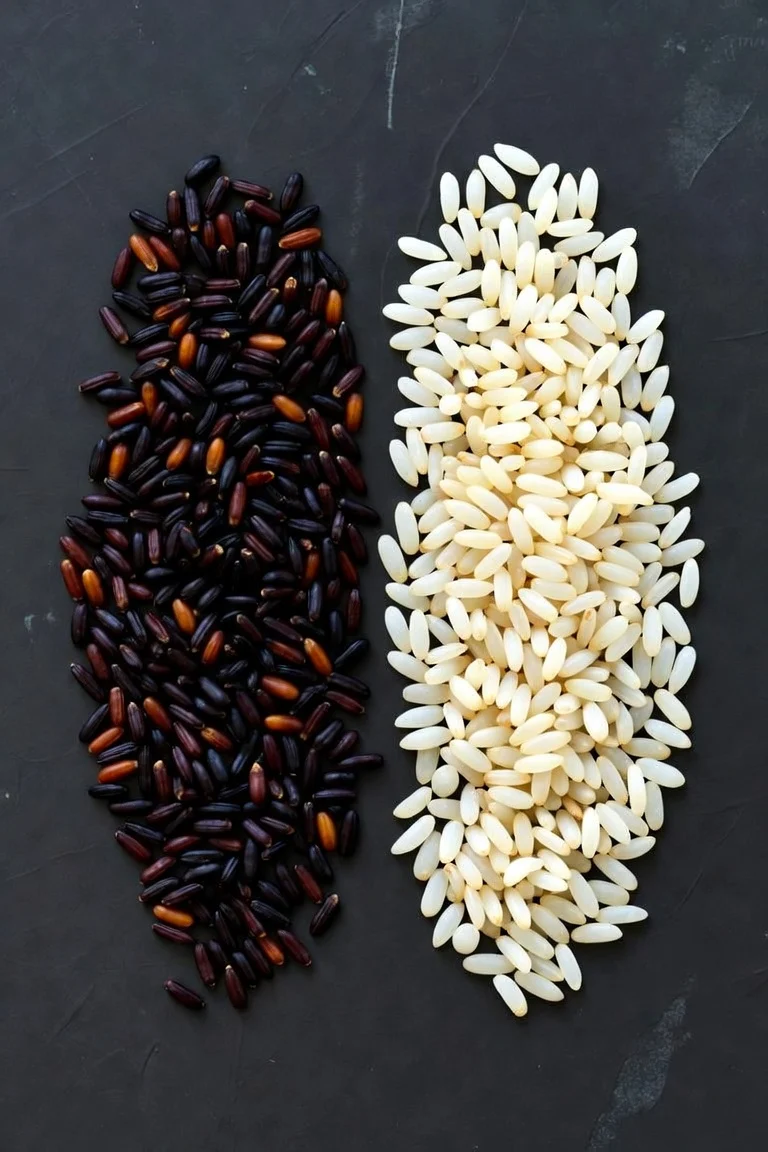
Black rice, historically known as “forbidden rice” in ancient China due to its rarity and royal status, contrasts sharply with common white rice in processing, nutrients, and health outcomes.
Processing and Appearance White rice undergoes milling that removes the bran and germ layers, resulting in a white color, softer texture, and extended shelf life. Black rice retains these layers, delivering its distinctive dark purple-black hue from natural anthocyanin pigments.
Nutritional Comparison Per approximately ½ cup cooked serving:
- Calories: Both around 130.
- Fiber: Black rice provides 1.5-2g vs. white rice’s less than 0.75g.
- Protein: Black rice edges higher at 3.3-4.9g compared to white’s 2-3g.
- Antioxidants: Black rice is loaded with anthocyanins (similar to blueberries); white rice has negligible amounts.
- Other: Black rice supplies more iron, calcium, and minerals; white rice is often enriched with B vitamins and iron but lacks natural whole-grain benefits.
Health Benefits and Risks Black rice promotes steady blood sugar control with its lower glycemic index, supports heart health through antioxidants that reduce inflammation, aids digestion and weight management via higher fiber, and may lower risks of chronic diseases like cancer and cardiovascular issues.
White rice offers quick energy and easy digestibility, beneficial for gastrointestinal sensitivities or low-fiber diets. However, regular high consumption associates with blood sugar spikes, increased type 2 diabetes risk, potential nutrient gaps, and overeating due to lower satiety.
Practical Tips
- Incorporate black rice for nutrient-dense meals like salads or stir-fries.
- Use white rice sparingly, paired with vegetables, proteins, and fats.
- Rinse both; vary grains for balanced diet and to minimize arsenic exposure.
- Cooking: Black rice takes longer but adds nutty flavor and chewy texture.
Prioritize black rice for long-term health while enjoying white rice occasionally. Diversify your rice intake for optimal nutrition.