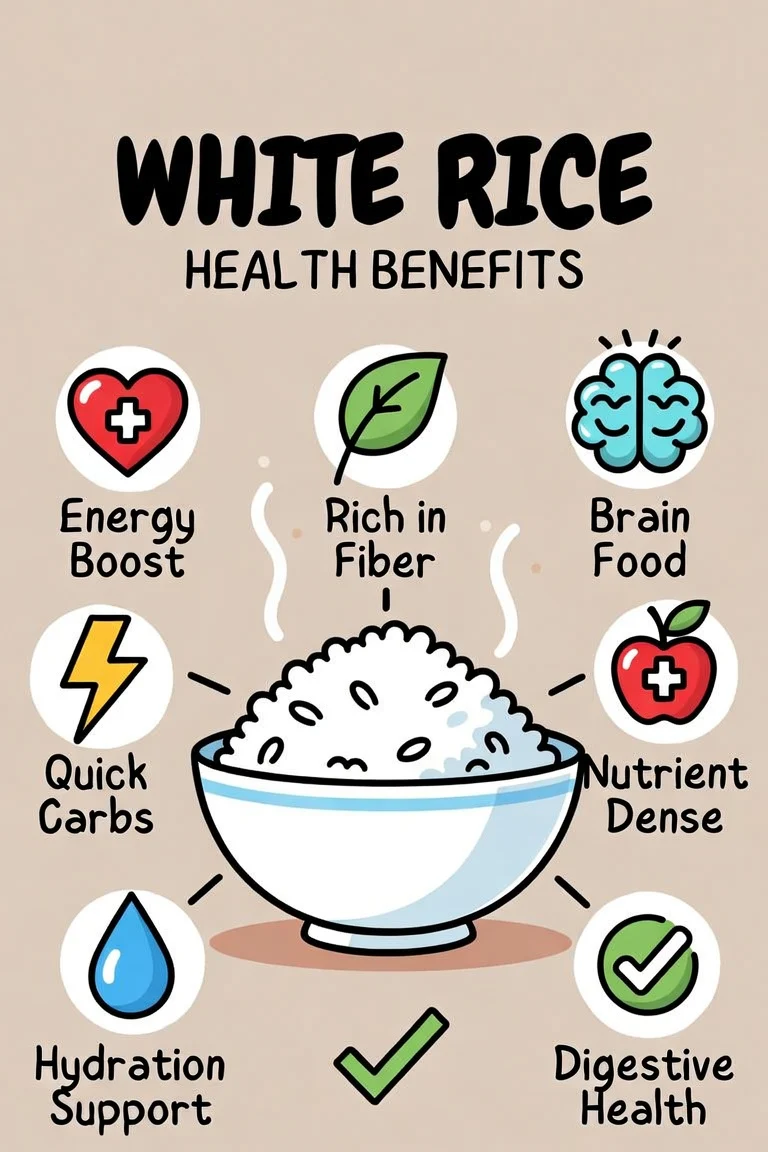
White rice is a staple food for billions worldwide, offering a reliable source of energy and several practical health advantages. While brown rice retains more fiber and nutrients from the bran and germ, enriched white rice remains nutritious and fits well into balanced diets.
Nutritional Profile
One cup of cooked long-grain white rice (about 158g) typically provides:
- Calories: ~205
- Carbohydrates: ~45g (primarily starch for quick energy)
- Protein: ~4g
- Fat: Very low (<1g)
- Fiber: Low (~0.6g)
- Key micronutrients (especially in enriched varieties): Manganese (up to 30%+ DV), iron, B vitamins (thiamin, niacin, folate), and magnesium.
White rice is naturally gluten-free, low in fat, and cholesterol-free.
Key Health Benefits
1. Provides Quick, Sustained Energy White rice is easily digested and absorbed, delivering rapid carbohydrates to replenish glycogen stores. This makes it ideal for athletes, post-workout recovery, or active lifestyles.
2. Easy to Digest and Gut-Friendly for Sensitive Stomachs Its low fiber content reduces digestive workload, making it suitable for people with IBS, diarrhea, gastritis, diverticulitis, or during recovery from illness. It is often recommended in low-residue or bland diets.
3. Gluten-Free and Allergy-Friendly Naturally free of gluten, white rice serves as a safe alternative for those with celiac disease or gluten sensitivity. It can be used in flours, noodles, or as a base for many meals.
4. Supports Bone, Nerve, and Muscle Health It supplies manganese and magnesium, which aid bone structure, enzyme reactions, nerve function, and muscle contraction.
5. Resistant Starch When Cooled Cooked and cooled white rice forms resistant starch, which acts like fiber. Benefits include better gut health (feeding beneficial bacteria), improved insulin sensitivity, lower inflammation, and steadier blood sugar. Reheating is fine and preserves much of this effect.
6. Versatile and Fortified Nutrition Many white rice products are enriched with iron and B vitamins, helping address common deficiencies while remaining mild in flavor and easy to prepare.
White Rice vs. Brown Rice
Brown rice offers more fiber, magnesium, and antioxidants, supporting long-term benefits like better blood sugar control and heart health. White rice excels in digestibility and quick energy, with a higher glycemic index (around 73 vs. ~68 for brown). Both can fit a healthy diet—pair white rice with vegetables, proteins, and healthy fats to balance meals.
Practical Tips for Your Rice Website
- Portion control: Stick to ½–1 cup cooked per meal.
- Enhance it: Add veggies, lean proteins, or herbs for balanced nutrition.
- Cooking hack: Rinse rice, cook, then cool in the fridge for resistant starch boost.
- Arsenic note: Rinse thoroughly and vary rice sources; levels are manageable in moderation as part of a diverse diet.
White rice is not an “empty calorie” food. It provides accessible energy, digestibility, and essential nutrients, especially when enriched. It shines for active individuals, those with digestive sensitivities, or anyone seeking a simple, versatile carb. Combine it with whole foods for optimal health.